Wednesday, May 23, 2012

Selling Digital Products Through ClickBank


By Jeff Kontur


Think of ClickBank as sort of like the eBay of instantly downloadable digital products. It is a vast marketplace of such products. Of course there's one little twist to the analogy: instead of being the storefront, it's more like the back room warehouse.

End-user consumers generally do not browse ClickBank for things to buy. Instead it is where you can store your product(s). It's also a place where enterprising entrepreneurs from around the world can look for things to sell.

If someone finds one of your products and decides he likes it enough to want to help you sell it he can sign up to become an affiliate, grab your link, sell your products and collect a commission on each sale he generates. These sales may take place on his website, through emails he sends out, he may create online ads such as with AdWords or in a hundred other ways.

You determine the amount of commission you are willing to pay beforehand and ClickBank takes care of everything automatically.

What kinds of products can you sell?
ClickBank only handles memberships and digital products which can be delivered instantly via digital download. You can offer a physical product, such as a book or CD but only if it's a supplement to an instant download. Specifically, ClickBank allows:
• Streaming and downloadable audio files
• eBooks
• Games
• Software
• Streaming and downloadable video files
• Web site membership fees

What does ClickBank do for you?
Aside from helping you recruit a worldwide sales force of commission only sales reps, ClickBank does several other things for you:
• It acts as an online shopping cart and payment processor
• Takes care of delivery and product fulfillment
• Provides tracking and reporting services

How much does it cost and is it worth it?
When you first sign up to sell your own products, you must pay a one-time only $49.95 fee. That fee is good for life (provided you don't violate ClickBank policies and get your account terminated) and allows you to sell an unlimited number of products in an unlimited number of categories.

Other than commissions that you pay to affiliate marketers for selling your products and a 7 percent sales commission to ClickBank, there are no other fees or costs.

Are there strategies for affiliate commissions?
ClickBank affiliate commissions are set by you but are applied in blanket form to all products marketed under your account. The minimum commission is 1 percent and maximum is 75 percent.

There are two strategies you might think of pursuing with ClickBank affiliates. The first assumes that you only want ClickBank as a payment processor and fulfillment house and would prefer that others not sell your products. In that event, set your commission percentage to 1 percent. Such a low percentage would not be worth anyone's while and no one will want to sell your stuff.

A generally more sound strategy is to set a high commission, 50 percent - 75 percent. I've even heard of some marketers offering special bonuses which must be paid manually outside of the ClickBank system, in essence making the commission rate even higher than ClickBank allows. In some cases even slightly over 100 percent.

By offering such high commissions, you attract and motivate profit hungry entrepreneurs to sell your products for you.

The theory behind this approach is that once someone has identified themselves as a buyer of your products - someone who is interested in what you have to offer and willing to pay for it - it is much easier and more profitable to sell to that prospect than to an "unknown" prospect. So you offer some front-end product as a loss leader to get customers in the door then market higher priced and more profitable products directly to those buyers without allowing affiliate marketing or paying sales commissions on those subsequent sales.

A secondary consideration is that your affiliates - your commission only sales force - can collectively attract more people than you can on your own. They are also likely to attract prospects from different places than you will try on your own. So you cast a wider net and bring in a more diverse clientele.

Another very important consideration is that, because these are all digital products, there is essentially no overhead in stocking or delivering them. You can afford to pay a higher commission when your costs are so low.

What if you want to become an affiliate yourself?
There is no cost to being a ClickBank affiliate. (The $49.95 fee is only if you want to sell your own products.) If you find products in the ClickBank marketplace which are similar or complimentary to yours, there is no restriction on selling those products and earning a commission on the sales.

The same strategy applies as outlined above; once you have turned a prospect into a customer, even of affiliate products, you are free to market your own back-end products to them for a higher profit potential. Assuming you have captured their contact information and have a way of marketing to them.

Jeff Kontur is a freelance copywriter and marketer specializing in helping small businesses promote themselves effectively online. Digital and eReader copies of his book "Fat-Free Marketing" are available for FREE from his web site Fat Free Marketing Group.

Tuesday, April 10, 2012

Before buying anything, read this first


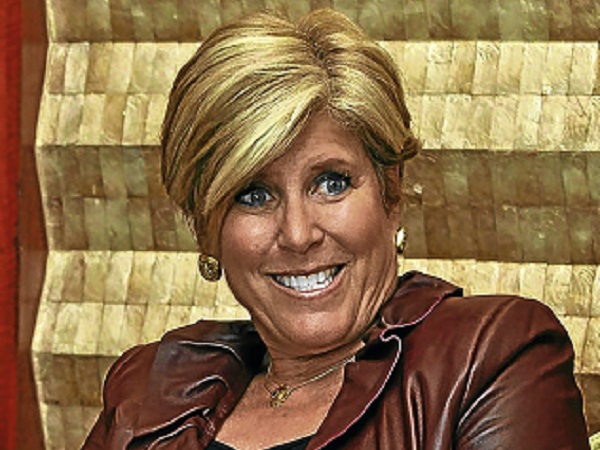
ORMAN: PH would soon shine in global arena.
ARNOLD ALMACEN

She chooses to live in a New York apartment that can fit in her friend Oprah’s bathroom, even if she could afford to buy a penthouse residence. She wears the same set of earrings and holds on to the same purse for decades until it’s worn out and beyond repair. If she sees a penny on the road, she will stop and bend over to pick it up because she believes every penny must be respected.


That’s American personal finance guru Suze Orman—a woman who emancipated herself out of poverty and made a career out of helping others do the same—practicing what she preaches. This multiawarded television host, motivational speaker and best-seller author who was once described by USA Today as a “one-woman financial advice powerhouse, Orman was in town last week to fulfill a promise made for the last five years to her friend Doris Magsaysay Ho, chair of Asia Society Philippines, to help inspire Filipinos in their quest for financial freedom.


While Orman herself chooses to adopt a lifestyle that’s much more Spartan than her means, many other people in the world do the opposite and she gained fame, fortune and influence for her advocacy to help people who are  caught in the debt trap. The host of the award-winning Suze Orman Show which airs every Saturday night on CNBC earns around $190,000 on speaking engagements in the United States but she agreed to speak before Filipinos for free and expressed interest to come back and help draft financial literacy programs for the country pro bono.


‘Highway to poverty’
In a speech before employees of Ayala-led Bank of the Philippine Islands which backed her visit to Manila, Orman says the Philippines would soon shine in the global arena. She says, however, that Filipino consumers must avoid going the way of the United States, which has allowed its economy to grow on credit, lending to people who could not afford homes, driving more people “on a highway to poverty.”


“Build this country on cash so that it could never collapse, then you can change your lives,” says Orman, who was raised in an unruly Chicago neighborhood and who used to wait on tables before transcending poverty as a securities broker at American investment house Merrill Lynch.


“You’re going to be taken note of in other countries, see investment money come and you’ll see that the time for the Philippines has just about arrived. The question is, will you be able to hold on to the gifts that are about to come your way?” she says.


Good and bad debt
The American personal finance guru spoke strongly against incurring debt to purchase non-essential things, noting she had watched her own country fall apart because of this.
She said consumers must distinguish between good and bad debt, good debt being amortizing to one day own a home.  On the other hand, she said that credit card debt was “very bad debt.”


“If you have credit card debt, what that says about you is that you are buying things that you can’t afford,” she says, urging banks to issue credit cards only to those who can responsibly use credit.  Ideally, she says credit card users should use their card all they want but pay everything when the bill arrives.


In the US, she says it was a common mistake for banks to even increase the credit limit when somebody had maxed out his ceiling and only paying the minimum due.
The best way to help these people would be to stop charging interest and as the borrowers pay off, reduce their credit limit.


For overseas Filipinos, Orman says her advice would be to consider whether sending money to adult brothers or relatives would only be encouraging dependence. “Is it possible that it’s hurting them rather than helping them?” she says, adding that some people may not reach their potential or may not be driven into making contingency plans because they have remittances to fall back on.


But she stresses that for parents, it’s a whole different light, as she herself would want to take care of her mother. Orman herself has Filipino helpers in the US and also taps Filipino call center agents in Manila to service her own voice call outsourcing needs.


Best commodity is time
For young people, she says they should realize that their best commodity is time and that by starting to regularly save a portion of their earnings regularly, they will accumulate more wealth with the help of compounding, which means earnings from an initial investment are reinvested over and over.


With the help of compounding, she says a person who sets aside $100 a month starting the age of 20 would end up with $1 million when this person is 60.  But if one waits until age 30 to start saving, the same person will end up with only $300,000 at age 60. This 10-year delay in starting an investment plan has thus cost the person $700,000, she notes.


On insurance, she says it’s a must for young people who have dependents—spouses or young children—and who have yet to build enough wealth that these dependents could live on if something happens to them. But she says the only type of insurance that would make sense would be term insurance with tenor approximating the time that one’s dependent would have reached adulthood.


From rock-bottom
Before becoming a prominent personal finance expert and inspirational speaker, Orman used to earn $400 a month as a waitress and at one point in time, slept in her car because she could not pay the rent.  She waited on table for seven years until the age of 30, when she dreamt of opening her own restaurant.  She asked her mother for $20,000 to open her restaurant but her mother was unable to help her.  One of her regular customers took a pity on Orman and pooled $50,000 from other customers to lend to her for 10 years without interest.  She brought the money to Merrill Lynch but the attending broker convinced the then naive Orman to speculate in the stock market. She says she was made to sign papers to make it appear that she was a sophisticated investor who was qualified to invest in stock options. Within three months, she lost all the money.


“If I hadn’t lost that money, I won’t be standing here today. Nothing ever goes wrong, everything happens for the best,” she says.


Realizing she still owed $50,000 to her customers, she thought of getting a job as a broker at Merrill, which at that time never hired female brokers.  She was hired but with a caveat that she would be fired in six months.


One Merrill Lynch executive took a liking at Orman and advised her to sue Merrill Lynch for the bad handling of her $50,000 investment even when she was still an employee. This she did and because of the ongoing case, Merrill Lynch could not fire her. As the case dragged on, she had become one of Merrill Lynch’s top producers and realizing that the firm was earning more money than Orman’s $50,000-suit, the brokerage gave back her money plus interest.  This in turn allowed Orman to pay back her kind-hearted friends.


Orman says this only showed that any wealth that she had made was something she had worked for.  Even as she has gone a long way since then, Orman is not fond of splurging on jewelry or clothes.  She had to change her purse recently, after 15 years, only because it was beyond repair.


‘Horrible’ investment
Jewelry, for her, is a “horrible” investment. Orman says that if you purchase jewelry and try to sell it when you need to cash in, you usually end up selling lower than your original buying price. But for her, investment in gold as a commodity, is “fabulous” and noted that gold is part of her personal portfolio.


On real estate, Orman says she had homes in different parts of the world but does not consider them as investments because they were for her own use.  She did not care whether their values go up or down.  On taking out equity in a home to buy another home, she says this was a no-no unless the owner had money backed up somewhere.


“Every single person in this world has the ability to be more and have more and it’s the choices that we make about ourselves that become our net worth,” she says.

Wednesday, April 4, 2012

On tithing............


tithing is only one of the keys to prosperity. There are other practical keys that one has to do to become prosperous. Like what? Like living simply; And saving regularly; And learning how to invest and knowing where to invest

~ Bo Sanchez

Monday, March 12, 2012

Money-wise, not ‘money-faced’


Question: What is the best way to help my child grow up to be money-wise and avoid the ruts that I fell into while I was growing up?—Concerned parent

Answer: How many new college graduates have entered the workforce with P100,000 in savings? Probably not a whole lot. Yet, you’d think that the many years of schooling would have prepared kids for the “real” world.  You see, here’s where the problem lies. There is too much reliance on schools when learning at home can be as easy and rewarding.

Try our 10-step approach to boosting savings among children. The approach is by no means comprehensive. You may even want to add your own steps or take out a few.

1.) Help set a goal. Children need to visualize things in order for them to comprehend complex concepts like savings and financial freedom.  Saving enough to buy a much sought after toy is one way to help children visualize their goal.

2.) Teach your child to give first. Money is but a tool to realize the more important and practical goals in life. By giving away some money first, like to the church and the needy, you are teaching your child to be free from the clutches of money. Besides, money given away first, cheerfully, faithfully, wisely and quietly will return in other forms of benefits pressed down, shaken together and running over.

3.) Collect loose change. By saving just P3.50 a day for five days in a week, four weeks in a month and 12 months in a year, your child would be able to save P840. That’s more than what somebody, who already has P100,000 to start with, will earn by keeping his money in a savings account in a bank for one year.

4.) Catapult your child’s savings. Tell your child that if he or she reaches a certain level of savings, you will triple those savings (i.e. add 200 percent of what he or she had saved). If you gave your child P50 a day starting at age 5 and told him or her to save at least 10 percent of his or her allowance and also promised to double his or her yearly savings, your child would accumulate P111,600 in savings (assuming the allowance goes up to P100/school day by age 10 and up again to P150/school day by age 15).

5.) Use the magic of compounding. To further grow your child’s savings, you could place your child’s money in a savings account or even a time deposit to make it earn faster. Given modest assumptions on the rate of interest, your child could end up with more than P136,000 by age 20.

6.) Allow your child to taste some of the rewards. Being able to reap some of the rewards from our hard work allows us to better recognize the value of all of that work. So let your child enjoy some of the fruits of his or her labor. Even if you let your child withdraw 5 percent annually, your catapulting his or her savings and using the magic of compounding will ensure that he or she enters the workforce with at least P102,000.

7.) Introduce the meaning of debt and risk. Your child will encounter debt and risk. It would be better that the teachings come from you rather than from just anybody out there. So when your child is already in his or her teens, teach your child the meaning and implications of debt and risk.

8.) Get your child’s feet wet in entrepreneurship. Being in business is a form of investing. Not all are cut out to be businessmen though.  Nonetheless, it would be ideal if your child realized his or her calling to being an entrepreneur when he or she is still young and able to quickly bounce back from any losses.

9.) Teach your child the value of insurance. Insurance is needed by everyone; all the more by young adults. Insurance is a way of managing risks in life and business, just like diversification is a way of managing risks in investing. Teach your child not to run away from a life insurance agent. To be prepared for such encounters, however, you must also teach him or her the right way of buying insurance.

10.) Be a shining example to your child. Perhaps the most important lesson that you can impart to your child is to be a shining example. All of the other nine steps would be lost if you don’t practice them yourself.

Applying these 10 steps in raising your child will definitely help him or her to be money-wise and not money-faced.

If you want to learn more about the foregoing computations as well as the foundation of effective personal cash, debt, risk and wealth management, attend the EnRich training scheduled on May 16, 2012. Visit www.personalfinance.ph, e-mail info@personalfinance.ph or call (632) 216-1541 for more details.

Take care of your child. Children are among our greatest treasures and blessings.

(Efren Ll. Cruz is a registered financial planner of RFP Philippines, personal finance coach, investment adviser and bestselling author. Questions about the article may be sent by SMS to 0917-505-0709 or e-mailed to efren@personalfinance.ph. To learn more about the RFP program, visit www.rfp.ph or e-mail info@rfp.ph.)

Sunday, June 19, 2011

Happy Father's Day!

Fathers Are Wonderful People:) happy


Fathers are wonderful people
Too little understood,
And we do not sing their praises
As often as we should...

For, somehow, Father seems to be
The man who pays the bills,
While Mother binds up little hurts
And nurses all our ills...

And Father struggles daily
To live up to "his image"
As protector and provider
And "hero of the scrimmage"...

And perhaps that is the reason
We sometimes get the notion,
That Fathers are not subject
To the thing we call emotion,

But if you look inside Dad's heart,
Where no one else can see
You'll find he's sentimental
And as "soft" as he can be...

But he's so busy every day
In the grueling race of life,
He leaves the sentimental stuff
To his partner and his wife...

But Fathers are just wonderful
In a million different ways,
And they merit loving compliments
And accolades of praise,

For the only reason Dad aspires
To fortune and success
Is to make the family proud of him
And to bring them happiness...

And like Our Heavenly Father,
He's a guardian and a guide,
Someone that we can count on,
To be always on our side.


~ Helen Steiner Rice ~

Monday, May 16, 2011

Prospectus Summary: San Miguel Corporation Pref. Series “1″ (SMCP1)

This preferred shares of San Miguel Corporation (SMC) was quite controversial when it was  created because this is a conversion from 35% of SMC’s common stocks, which has a voting-right, and part of that converted common stocks to preferred stocks were the contested Coco Levy Funds of the coconut farmers. By converting the common shares attributed to the coco levy funds, the purported  owner of the levy funds losses part-ownership of SMC and its voting rights in exchange of a fixed dividend income.  Also, the Issuer (SMC) can anytime, three years after the issuance, redeem the preferred shares and totally strip all the remaining connection of the levy fund to San Miguel Corporation.
Below is the prospectus summary of SMCP1:
  • Issue price: an exchange ratio of one (1) Series 1 Preferred Share for every one (1) Class “A” or Class “B” common share tendered, or Php75.00 per share.
  • Dividend Rate: A fixed annual dividend rate of 8.0% which was based on 5-year PDST-F plus a spread determined by the SMC Board.  It is payable quarterly, beginning on the third month after the Issue Date.  If the company’s Board does not declare dividend for the dividend period, dividends on the Shares will be cumulative.
  • Redemption: Shares are redeemable in whole or in part, at the sole option of the Corporation, at the end of three years from the Issue Date
  • Other Features: The shares are perpetual, non-voting, non-convertible, and non-participating.
  • Dividend Rate Step-up: If not redeemed at the end of the fifth year from the issue date thereof (the “Issue Date”), the Dividend Rate shall be adjusted to the higher of (i) the current Dividend Rate, and (ii) the 10-year PDST-F Rate (or such successor benchmark rate) as displayed under the heading “Bid Yield” as published on the PDEx Page (or such successor page) of Bloomberg (or such successor electronic service provider) at  approximately 11:30 a.m. Manila time on the date corresponding to the end of the fifth year from the Issue Date plus a spread of up to 300 basis points.
  • Issue Date: Oct. 5, 2009 (??)

Friday, May 13, 2011

Prospectus Summary: Petron Corporation Preferred (PPREF)

This preferred shares offered by Petron Corporation  is superior than other preferred shares like ACPR, ACPA, FPHP, SMCP1 and Pure Foods  because of its relatively high dividend rate and step-up rate, in case of non-redemption.  But the investors must be cautious because this high return might have high risk involved.
Below is the summary of PPREF prospectus;
  • Offer Price: Php100 per share with a par value of Php1.0 per share
  • Dividend Rate:  fixed rate of 9.5281% per annum. The declaration and payment of dividends on each Dividend Payment Date will be subject to the sole and absolute discretion of the Board of Directors to the extent permitted by law. If the Company‘s Board does not declare a dividend on the Shares for a dividend period, dividends on the Shares will be cumulative. Dividends on the Shares will be payable quarterly on March 5, June 5, September 5 and December 5 of each year.
  • Dividend Rate Step-Up:  In case of non-redemption of the Issuer, the Dividend Rate shall be adjusted on the Optional Redemption Date to the higher of (a) the current Dividend Rate or (b) the 10-year Fixed Rate Treasury Note benchmark yield as displayed on the PDST-F screen of the PDEx page (or such successor page) of Bloomberg (or such successor electronic service provider) at approximately 11:30 a.m. for the date corresponding to the Optional Redemption Date plus a spread of 487.5 basis points.
  • Other Features: the Preferred shares are non convertible, non-participating and non-voting
  • Listing:  The shares were listed on the PSE on March 5, 2010.